

Welcome to Issue Seven of SURVIVE Magazine - The Journal of Modern Preparedness.
This magazine was forged in the image of the original SURVIVE publications of the 1980s—hard, practical reading meant for people who understood that comfort is temporary, and stability is never guaranteed. Those pages dealt with nuclear war, street crime, food shortages, economic breakdown, and living off your own hands when systems failed. That mindset wasn’t paranoid then. It was realistic. And it matters now more than ever.
I’ve also taken inspiration from The Modern Minuteman, a monthly newsletter that focuses on the journey to be a modern minuteman. It’s worth your attention.
As 2026 moves forward, the signs are getting harder to ignore. Prices keep climbing. Paychecks don’t stretch like they used to. Trust in the systems we once relied on continues to degrade. There’s a thick tension in the air that is unmistakable. Beyond our borders, the world is less stable by the day.
This isn’t the year to drift through life on autopilot.
This isn’t the year to assume things will sort themselves out.
This is the year to take a hard look at where you stand.
To identify the weak spots.
To start closing the gaps—on purpose.
This month, we’re focusing on one of the most important skills a person can have: the ability to grow food. Not as a hobby. Not as a weekend project. But as a real, usable skill that puts food on the table when it matters.
Even a small garden can make a difference. A few raised beds. A handful of buckets. A patch of ground behind the house. It all adds up. And once you start, you realize how much more is possible.
SURVIVE exists for one reason: to help you think clearly when others freeze, to act while there’s still time, and to build real capability before you’re forced to.
If this issue gets you moving—even in a small way—pass it along to someone else who needs it. This kind of knowledge spreads best the old-fashioned way: person to person.
Stay alert. Stay ready.
— Jake Martin
Editor, SURVIVE Magazine
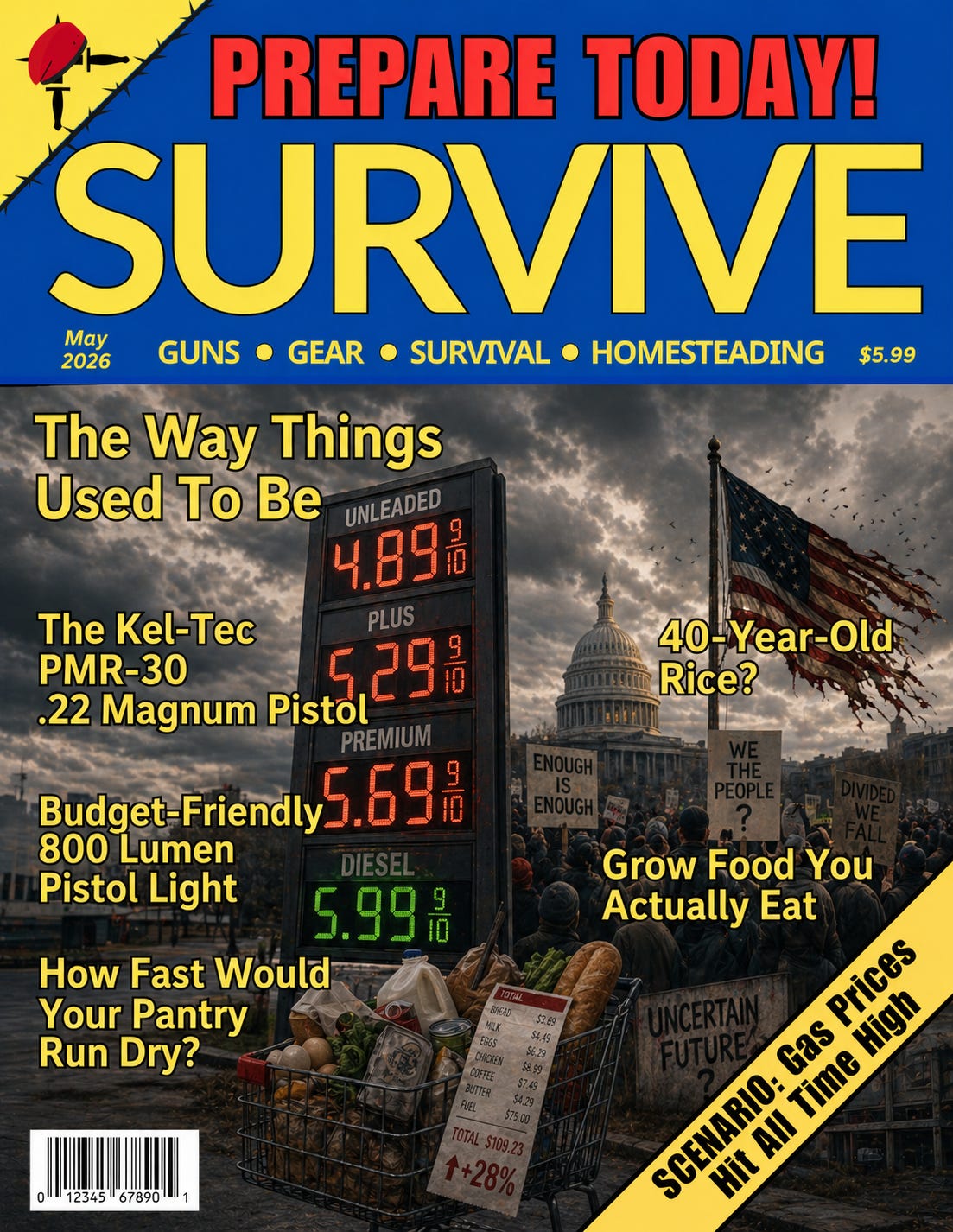
OPINION: The Way Things Used to Feel
Jake Martin | Modern Exodus
Lately, I’ve been feeling it more than usual.
Nostalgia.
I’m 56 years old now. I grew up in the 80s, came into my own in the 90s, and I’ll say it straight—I think those were the best years to be alive. Not perfect. Not easy. But real in a way that’s hard to explain to anyone who didn’t live it.
Back then, life had texture.
The music meant something. You didn’t just scroll past it—you waited for it, recorded it, memorized it. You knew the songs. They became part of your life. The movies? Same thing. You didn’t have endless options. When something good came out, it was an event. You went with friends, sat in a packed theater, and walked out talking about it like it mattered—because it did.
And the malls… that was where life happened. You didn’t need a plan. You just showed up. Friends were there. Conversations happened face to face. You laughed, you walked, you grabbed something to eat that probably wasn’t all that good for you—but it tasted better back then. Or maybe it just felt better because of who you were with.
Even school had a different feel. There was structure, sure, but there was also connection. Real friendships. Real moments. You weren’t distracted by a screen in your hand every five minutes. When you were somewhere, you were actually there.
And I’ll tell you something else that’s hard to put into words…
Things seemed more colorful.
The air smelled different. Food tasted better. Experiences felt deeper. Maybe it’s age. Maybe it’s perspective. Or maybe it’s because we weren’t buried under the weight of constant noise, constant updates, constant pressure from every direction.
Life wasn’t perfect—but it felt simpler.
Now?
Everything is faster. Louder. More complicated. More uncertain.
And if you’re not careful, you can spend a lot of time looking backward, wishing you could go there again.
I get it. I’ve been there myself.
But here’s the truth we’ve got to hold onto:
We don’t get to go back.
What we do get is today.
We get the people in our lives right now. We get the chance to build something meaningful, even in a world that feels like it’s shifting under our feet. We get the opportunity to create the kind of life that, years from now, we’ll look back on and say—those were good days too.
That doesn’t happen by accident.
It happens when you put the phone down and sit across from someone you care about. When you take the time to build something with your hands. When you cook a meal at home instead of grabbing something quick and forgettable. When you make memories on purpose instead of letting time slip by unnoticed.
It happens when you choose to live a real life in a world that’s trying to pull you into a fake one.
The truth is, maybe what we miss most about the 80s and 90s isn’t just the music or the movies or the malls.
Maybe it’s the way we lived.
Present. Connected. Engaged.
That’s something we can still have—but we’ve got to fight for it now.
So yes, I’ll remember those years. I’ll smile when a song comes on or when something reminds me of being a kid with nothing but time and a whole life ahead of me.
But I’m not staying there.
There’s still work to be done. There are still relationships to build. There are still memories waiting to be made—right here, right now.
And if we do it right…
Someday, we might look back on these years and say the same thing.
Those were good days too.

On the Kel-Tec PMR-30 .22 Magnum Pistol
After owning the Kel-Tec PMR-30 for the last twelve years(give or take), I can report it’s been a very reliable firearm - with a couple of caveats. Limiting the magazine to 25 rounds and sticking to quality ammunition like Hornady Critical Defense has made all the difference in ensuring consistent performance. The PMR is a blast to shoot. I have a few spare magazines, and having them loaded with 25 rounds each will give me 75 rounds of shooting before I need to reload. A lot of fun!!

When the PMR first came out, I imagined it would make a great “bug out” gun to throw in a backpack with extra mags and ammunition. More powerful than a .22LR and much lighter than almost every other pistol out there seemed a good fit. The problem is the reliability. While it works extremely well and I rarely have jams nowadays, it’s not reliable enough to use a defensive firearm. It’s really a shame, but it is what it is.

I would still love to get the carbine version of the PMR - the CMR-30. Maybe someday, however, every time I come across one, it’s on the expensive side. Anyone reading this who has a CMR-30 - please comment and let us know what you think.
Not a very detailed review here. The Kel-Tec PMR-30 is a unique and really fun gun to shoot.
Take care all -
Jake


Will Rice Stored for 40 Years Still Be Good?
Via a conversation with Fred Choate, owner of Choate, Machine, and Tool, I found out that he had a rare experience with rice that had been stored for 40 years. Yes - 40 years! While many of us state that rice and other foods will last “forever,” this is the longest I’ve heard of someone actually testing their long-term food storage.
Here’s a brief discussion:
Fred - We were cleaning out Dad’s personal storage at the factory. This was May 2018. We found a couple pallets of food Dad put up between 1976 and 1978. Rice, brown beans, and shell macaroni. They were new one-gallon paint cans he rigged a CO2 tank with a stainless steel probe he inserted to the bottom of the can. He cracked the valve and let the can fill up and push the air out the top of the can. He had a 5-minute timer. I brought a can of rice home and opened it. I cooked it next to fresh rice. The 40-year-old rice was yellowed. I cooked a cup of each. The old rice had a very mild, flat taste but was not bad tasting at all. I ate half of it with no issues. Made the whole gallon can and fed it to the dogs. I haven’t tried the beans or macaroni.
Jake: This is great information to have on long-term food storage.
Fred - Yes, it’s info that is good to have. It was kept in an uncooled or heated shop, almost the worst possible environment. The corrosion on some of the cans is where a jug of bleach on the shelf above leaked. I pitched all the cans that looked like they had holes in them. I still have all the cans that were left. I figured I would make dog food out of it. I have thought about trying the beans. It was the first long-term storage food Dad put up. I remember helping put the CO2 in the cans.
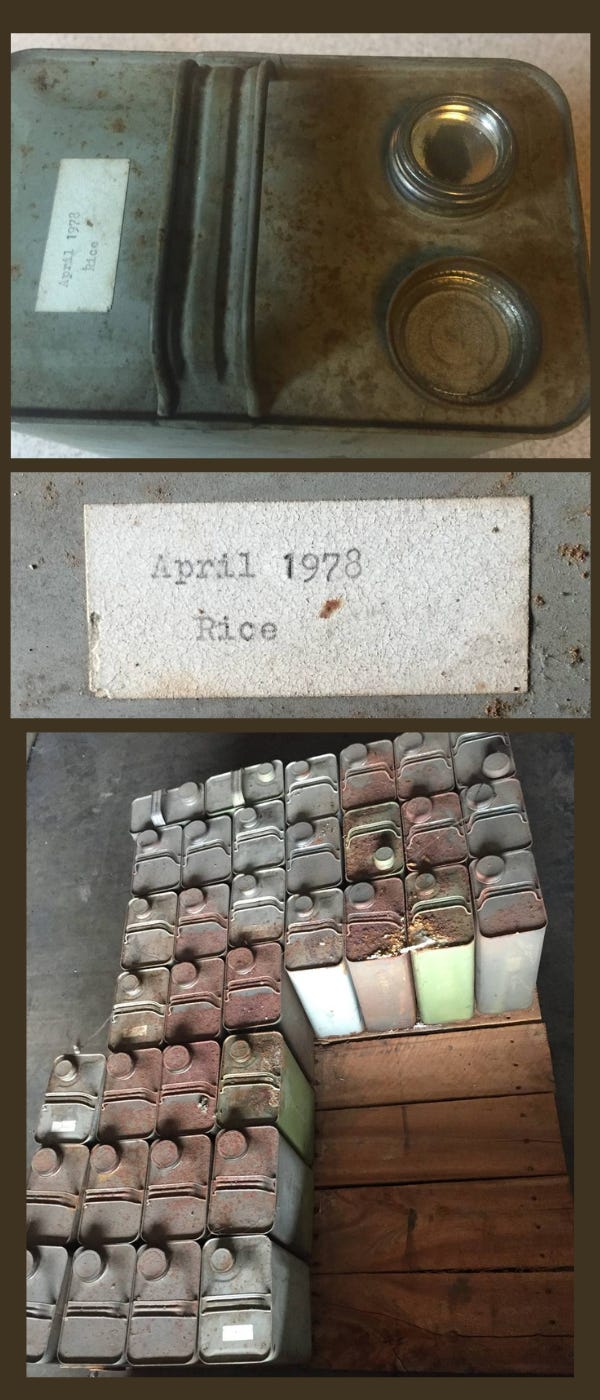
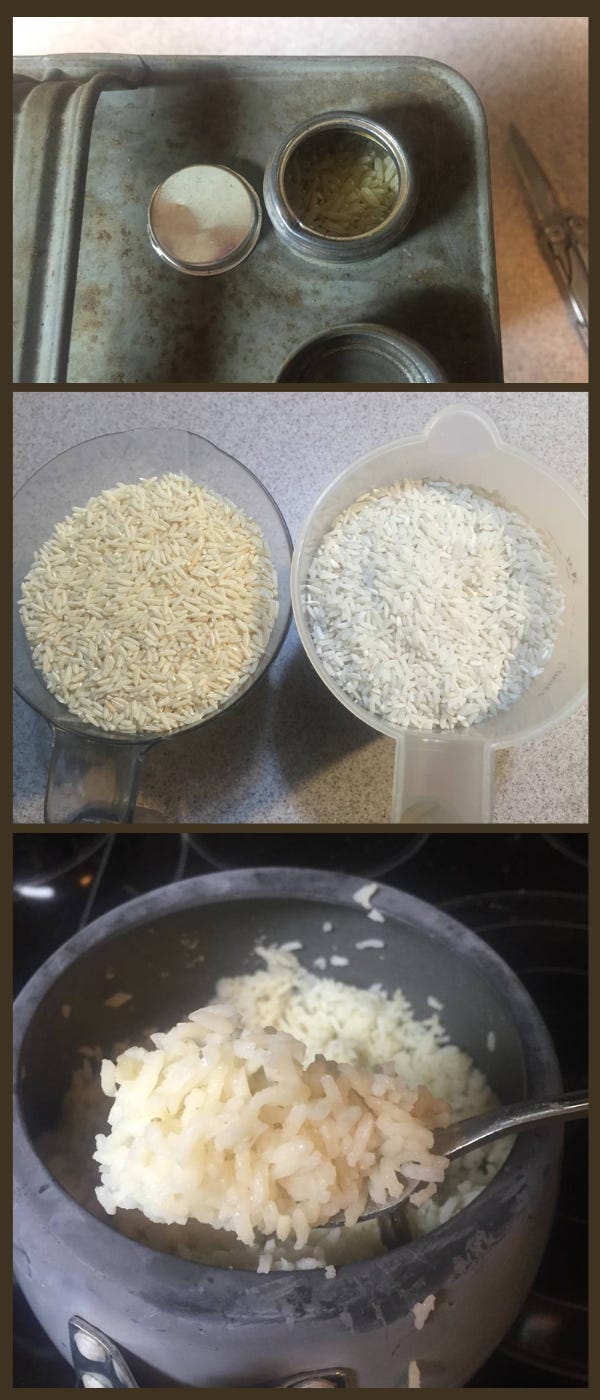

After hearing about this, I asked Fred if I could share the information, and he said, “Sure!”
If you are not familiar with Fred’s company - Choate, Machine, and Tool - check out their website. They are a leading supplier of firearm accessories, specializing in stocks. They’ve been around a long time and have a great reputation for quality and value.
By the way, I love their pistol grip stock for the Ruger 10/22. Sweet! Oh - and Made in the USA 🇺🇲!
Thanks again for sharing Fred!
Jake Martin, Modern Exodus
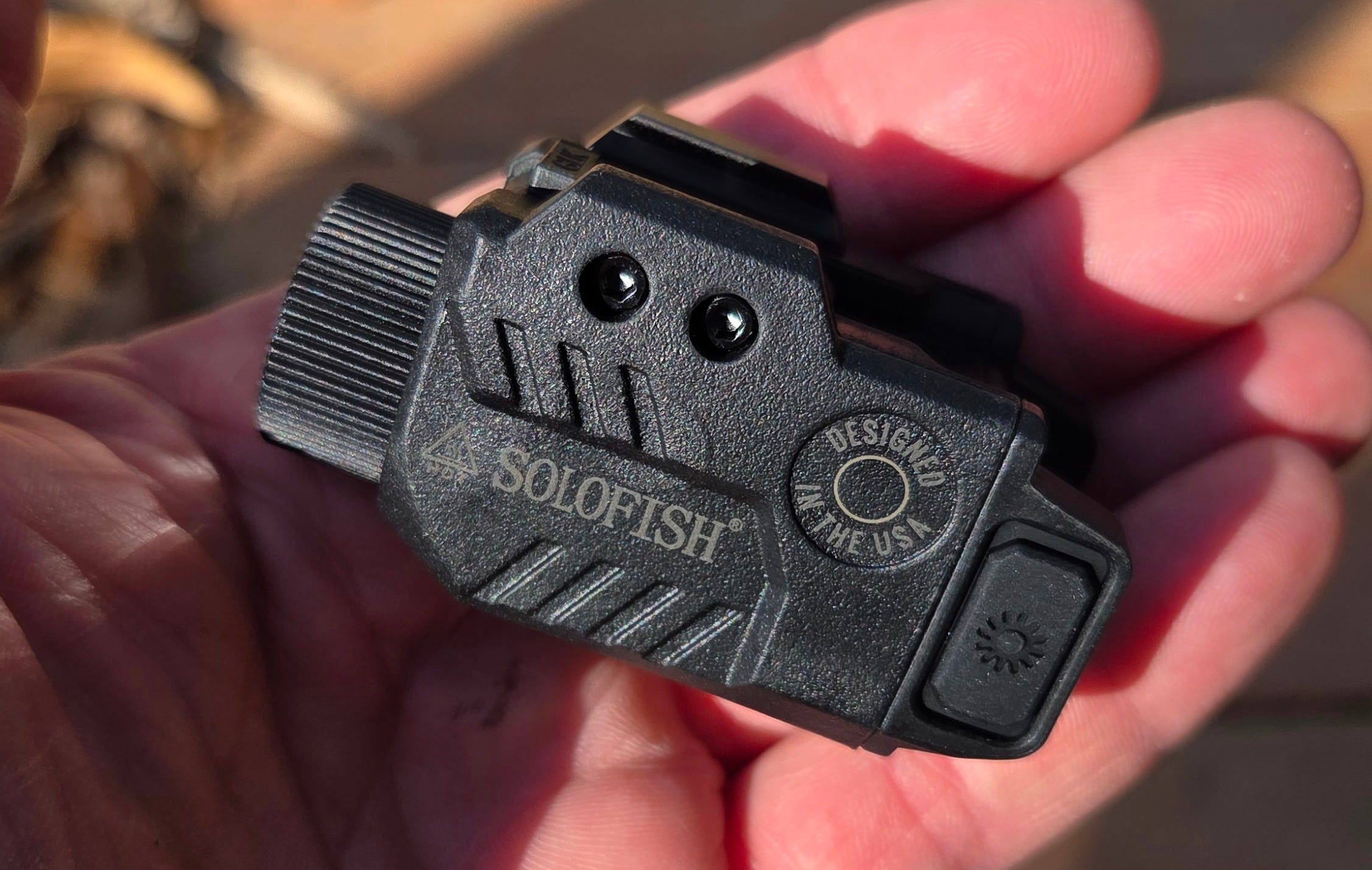
Budget-Friendly 800 Lumen Pistol Light
Every now and then, something cheap surprises you.
I recently picked up a pistol light from Temu—and I’ll be honest, expectations were low. Most people hear “Temu” and think disposable junk. And sometimes, that’s fair.
But not always.
This light is one of those exceptions.
For a fraction of the cost of the big-name brands, you’re getting a surprisingly solid piece of gear. It mounts securely, throws a bright, usable beam, and holds up under regular handling. No, it’s not going to replace a high-end duty light that costs $150–$300—but that’s not the point.
The point is value and functionality.
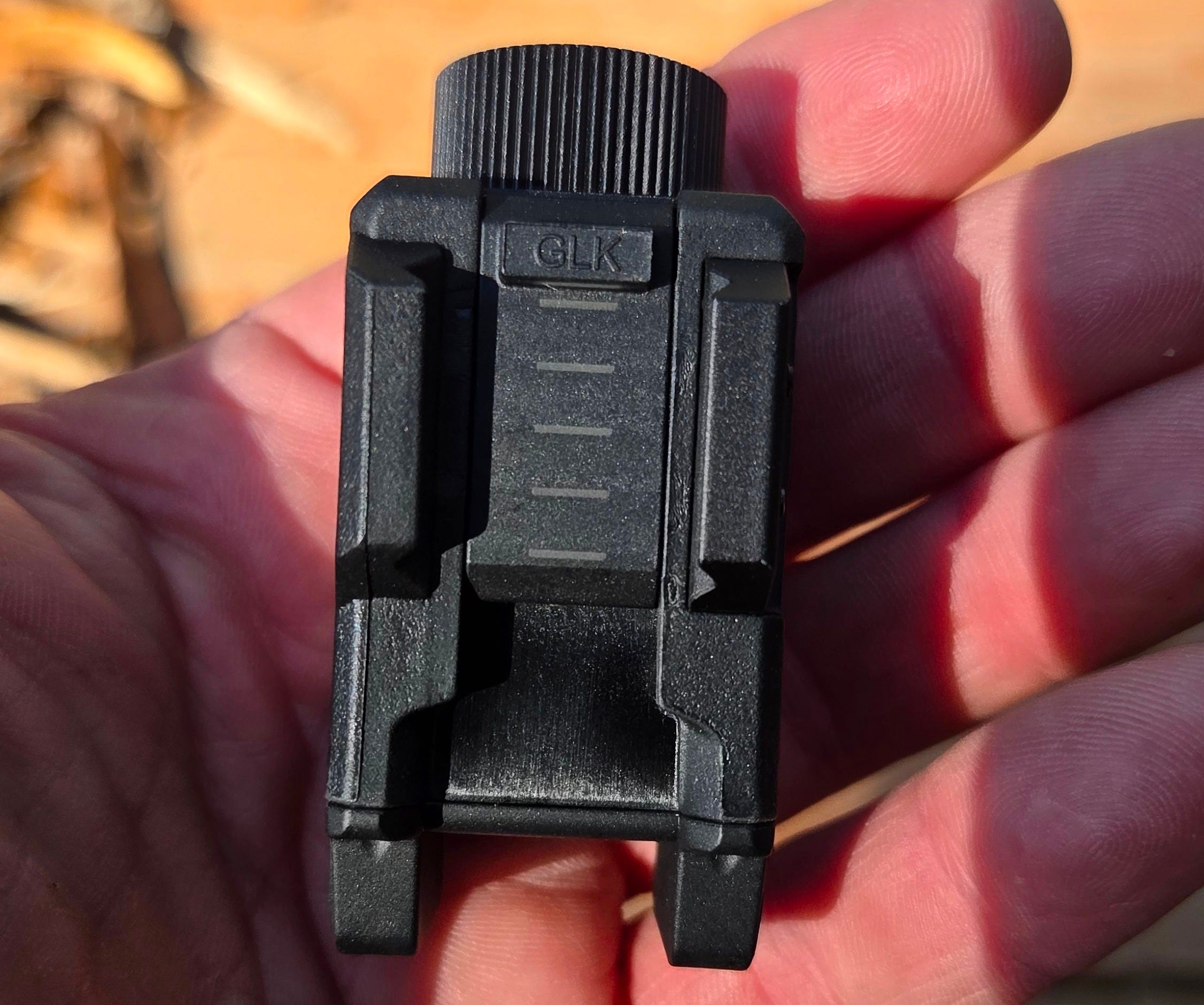
If you’re building out a backup firearm, setting up a range pistol, or just want a light without spending a chunk of your paycheck, this is a practical option. It gives you capability where you might otherwise go without.
And that matters.
Now, if you don’t like buying from Temu or prefer to avoid overseas products altogether, that’s fine. There are plenty of alternatives out there—just expect to pay more. But at least you know what you’re getting into.
At the end of the day, preparedness isn’t about brand names. It’s about having gear that works when you need it.
And sometimes, that comes from unexpected places.
🔗 LINK: https://share.temu.com/4A4AUe2PRjC

🔗 Complete Survival Library USB - use coupon code “10OFF” for 10% off all orders
There’s a shift happening, whether people want to admit it or not.
Prices keep climbing. Supply chains feel stretched. And more folks are starting to realize just how dependent we’ve all become on systems we don’t control.
Growing your own food doesn’t fix everything…
But it’s a step back in the right direction.
It doesn’t have to be perfect.
It doesn’t have to be big.
It just has to start.
A few buckets of potatoes on a deck.
A raised bed in the backyard.
A small garden that feeds your family real food.
That’s where it begins.
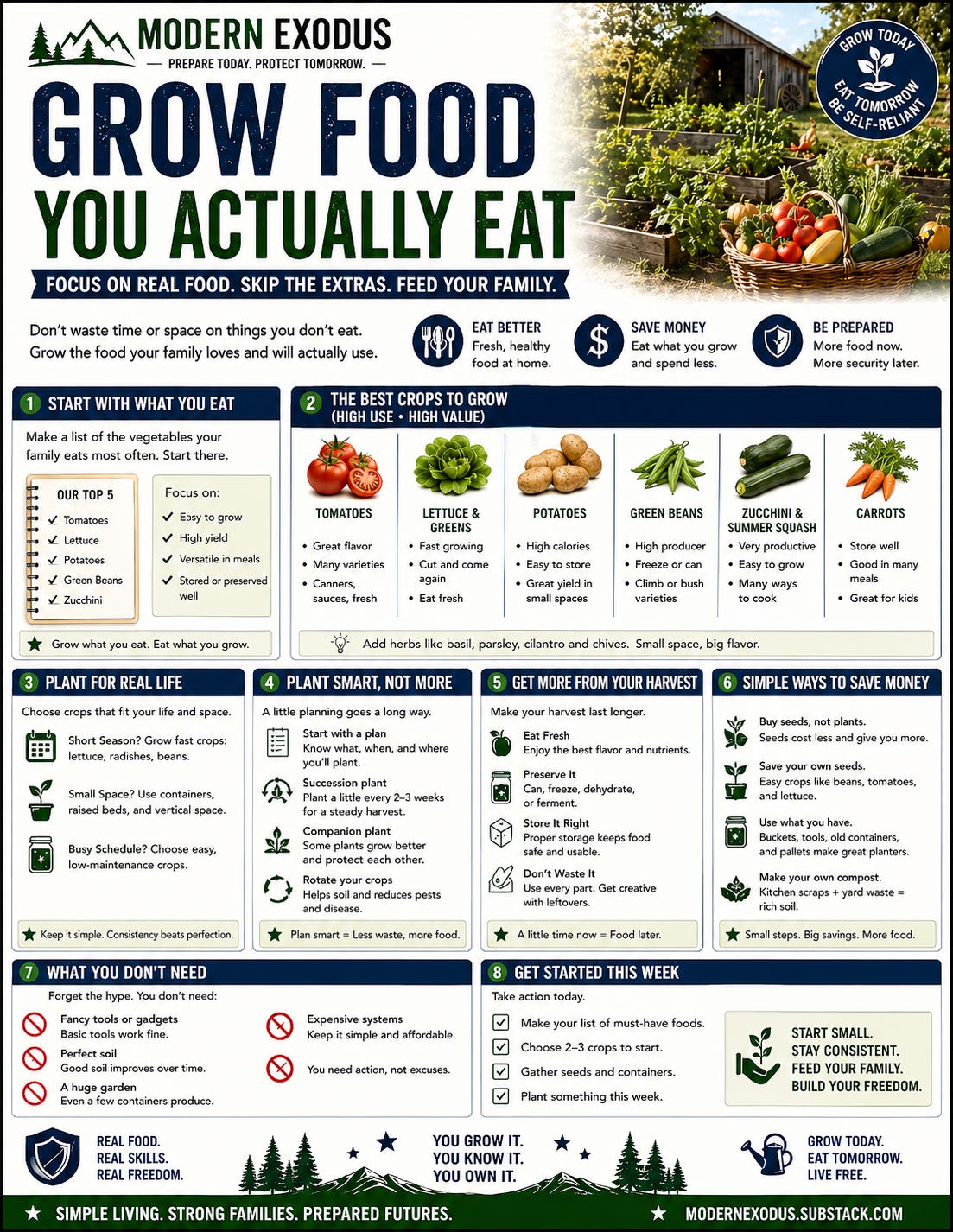
You don’t need to grow everything… just grow what you actually eat.
Build from there. Learn as you go.
Because in uncertain times, the goal isn’t comfort—it’s capability.
Start small. Stay consistent. Feed your family.
Keep preparing.
The above short video showcases several digital preparedness resources available at ExodusReadyGear.com
Instant download and very budget-friendly.
How Fast Would Your Pantry Run Dry?
Take a minute and think about it.
If the trucks stopped rolling today… if the shelves at your local store were empty by the weekend… how long could you keep feeding your family with what you already have?
A week?
A few days?
Maybe less than you’d like to admit.
Most homes aren’t stocked the way people think they are. We have food—but it’s scattered. A box here, a couple of cans there, something in the freezer. It feels like enough because stores are always nearby.
But what happens when they’re not?
We’ve already seen small glimpses of this. Empty shelves. Delayed shipments. Prices climbing faster than paychecks. It doesn’t take much to disrupt the system we depend on every day. And the truth is, that system is more fragile than most people realize.
If you had to rely on your pantry starting tonight, things would change fast. Meals would get smaller. Choices would shrink. Stress would rise. And that quiet question would start creeping in…
How much time do we really have left?
That’s not a place you want to be making decisions from.
Now is the time to get ahead of it.
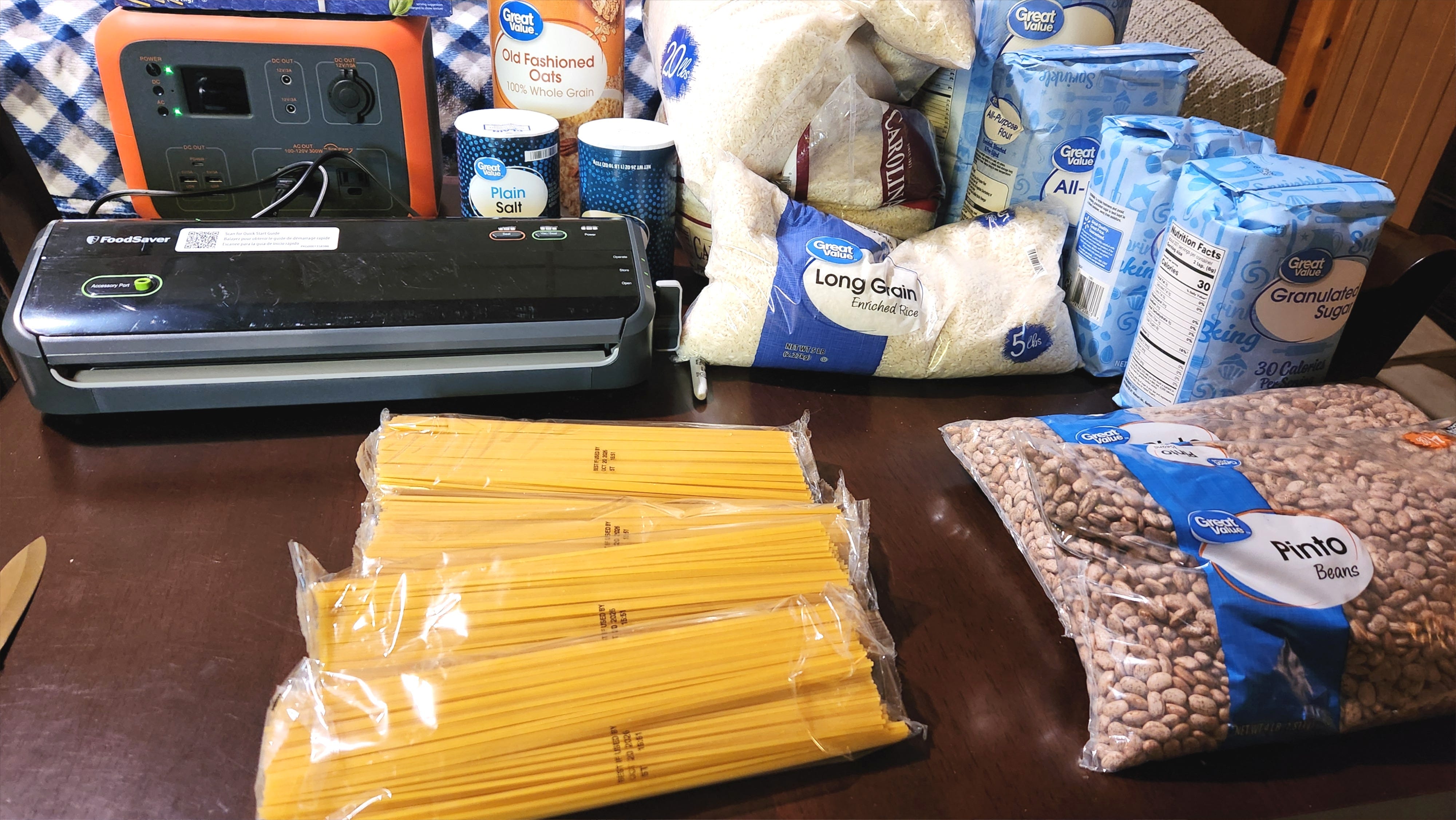
Start simple. Look at what you already eat. Build from there. If your family eats chili, stock more of it. If it’s pasta, rice, canned chicken, vegetables—focus on real meals, not random items that don’t go together.
Think in weeks, not days.
One week of food turns into two.
Two turns into a month.
A month starts to give you breathing room.
And that breathing room matters more than you may realize.
This isn’t about building some massive bunker full of food overnight. It’s about steady, intentional progress. Every extra can on the shelf. Every bag of rice put away. Every meal you plan ahead of time.
It adds up.
Because when things get tight—and they will for many—those who planned ahead won’t be scrambling. They won’t be standing in empty aisles hoping something shows up.
They’ll be at home, feeding their families, staying calm, and thinking clearly about their next move.
Take inventory this week. Open your cabinets. Check your shelves. Be honest with yourself.
Then start building something better.
Not someday. Not when it feels more comfortable.
Now.
Jake Martin


Check out Palmetto State Armory for some of the best deals on firearms, ammunition, and magazines.
Free Survival & Preparedness Downloads
Information is valuable. Power grids, communication networks, and the internet may go dark—but what you know and what you’ve stored will remain.

Here we have compiled a collection of printable PDF downloads covering essential topics such as food storage, first aid, homestead security, and more. These files can be safely stored on rugged USB drives or SSDs, ready to access offline using a tablet, phone, or laptop when you need them most.
📥 [Access the Free Downloads Here]
Stay ready. Knowledge is power.
Empty Pipeline: A Scenario You Should Think About
Note from Jake: With what is happening in the world right now, this scenario is not very far-fetched. I struggled with including it this month or not and ultimately decided to provide it. With a likelihood that fuel shortages and prices will continue to increase, it should give you something to think about.
It doesn’t happen all at once.
At first, it’s just another headline. Tensions in the Middle East. Ships being rerouted. Insurance rates for tankers are climbing fast. Then comes the breaking news—the Strait of Hormuz is closed. Not partially restricted. Not “under threat.” Closed.
Roughly 20% of the world’s oil moves through that narrow stretch of water.
Now it’s not moving.
At the same time, conflicts in other regions start to stack up. A pipeline in Eastern Europe is damaged. Protests shut down refineries in South America. Shipping delays pile up at major ports. It’s not one event—it’s several, all hitting at once.
Within a week, oil markets react.
Within two weeks, fuel deliveries begin to tighten.
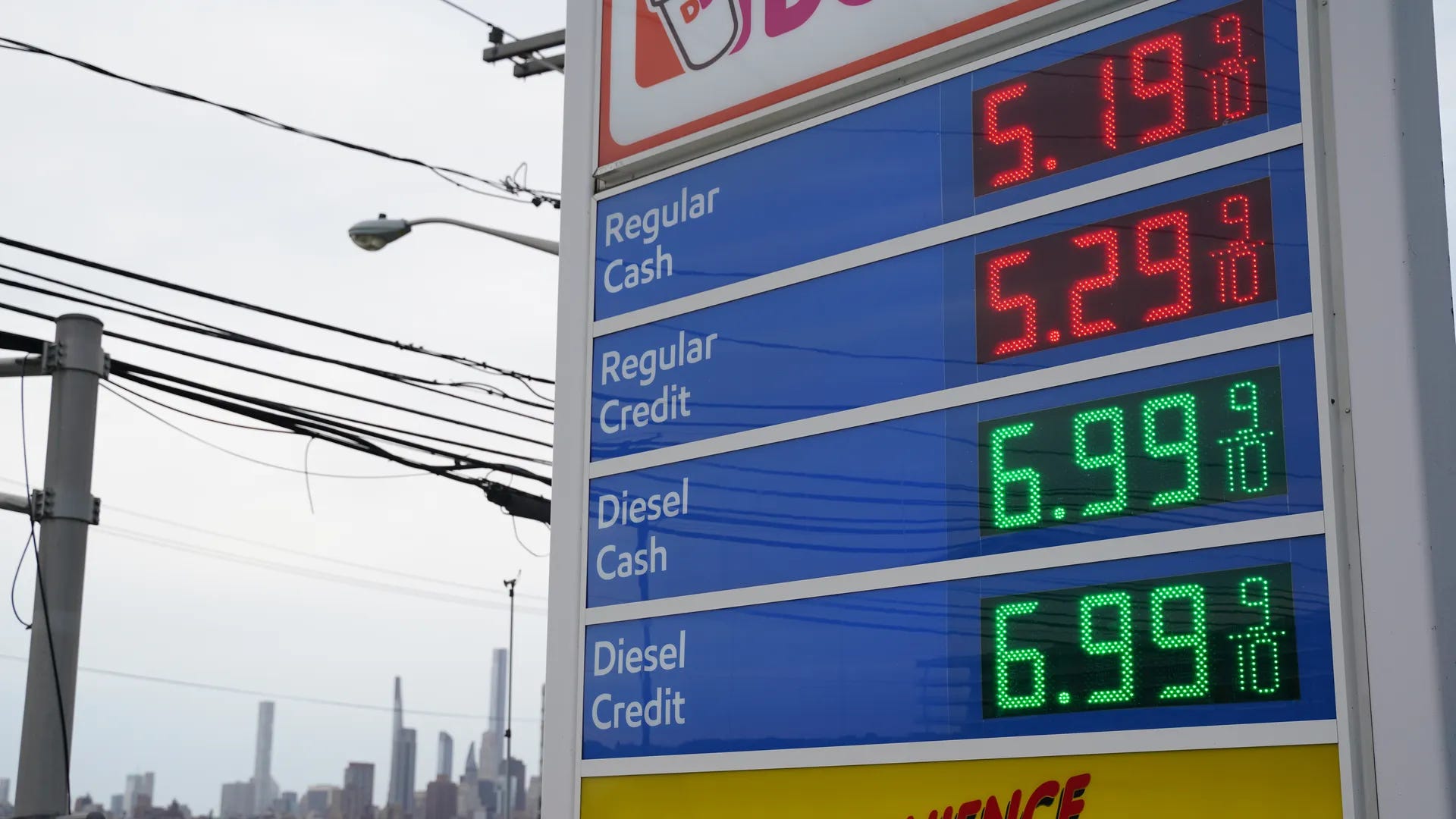
Within a month, regular gasoline in the United States climbs past $5.00 per gallon—and keeps rising.
What It Looks Like at Ground Level
You wake up and head to the gas station like any other day.
Except the price sign isn’t what you remember.
$5.19… $5.47… $5.63.
People aren’t topping off anymore. They’re putting in $20 and hoping it gets them through the week. Lines start forming at certain stations, especially after rumors spread about shortages.
Truckers feel it first.
Fuel is one of their biggest costs. When diesel spikes, everything they haul becomes more expensive. Some independent drivers park their rigs because it’s no longer profitable to run them.
That’s when the real effects begin.
The Cost of Everything Starts to Climb
The grocery store doesn’t run on magic. Every item on the shelf got there by truck.
Now those trucks cost more to run.
Within weeks:
Milk goes from $3.50 to $5.00
Ground beef jumps several dollars per pound
Eggs, bread, canned goods—all creeping higher
It’s not just food.
Amazon deliveries slow down or get more expensive. Building materials spike again. Local hardware stores raise prices to keep up with replacement costs. Even basic household items start to feel like a stretch.
If it moves, it costs more.
Daily Life Changes Fast
People begin adjusting, whether they want to or not.
Commuting becomes a real problem. That 30–40 minute drive to work suddenly costs hundreds more per month. Some start carpooling. Others cut back on trips or look for remote work.
Vacations get canceled.
Weekend drives disappear.
Even simple things—like running into town for a quick errand—get second-guessed.
You start planning your trips. Combining stops. Thinking ahead.
Pressure Builds at Home
For the average family, the math gets tight.
Higher gas prices
Higher food prices
Higher utility costs (because energy prices rise across the board)
But income?
That doesn’t change.
So people start making cuts.
Eating out stops. Subscriptions get canceled. Projects get delayed. Some dip into savings. Others start using credit just to stay afloat.
The stress builds quietly at first… then all at once.
Employment
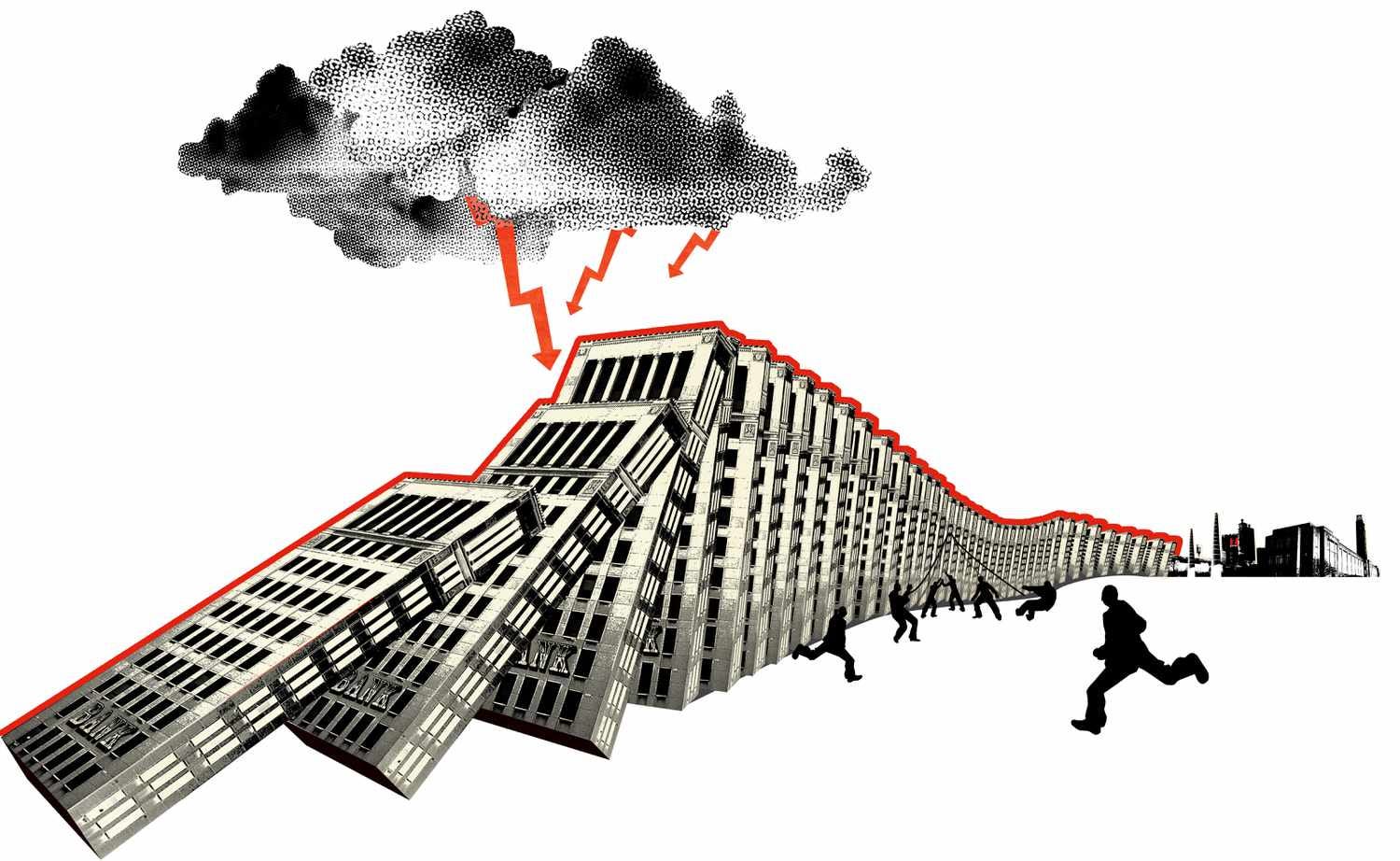
Companies see their sales drop. The population as a whole reduces commerce, and businesses suffer.
Some businesses reduce hours. Others eliminate positions.
Unemployment rises, though, the government minimizes the numbers with creative calculations.
Like a line of dominoes, one gets knocked over, and the others begin to follow. Sales drop due to less available funds from people; businesses receive less money, reduce hours, and eliminate positions, leading to further declines in sales, etc.
It keeps going.
~ Jake
Scene From the Homestead:
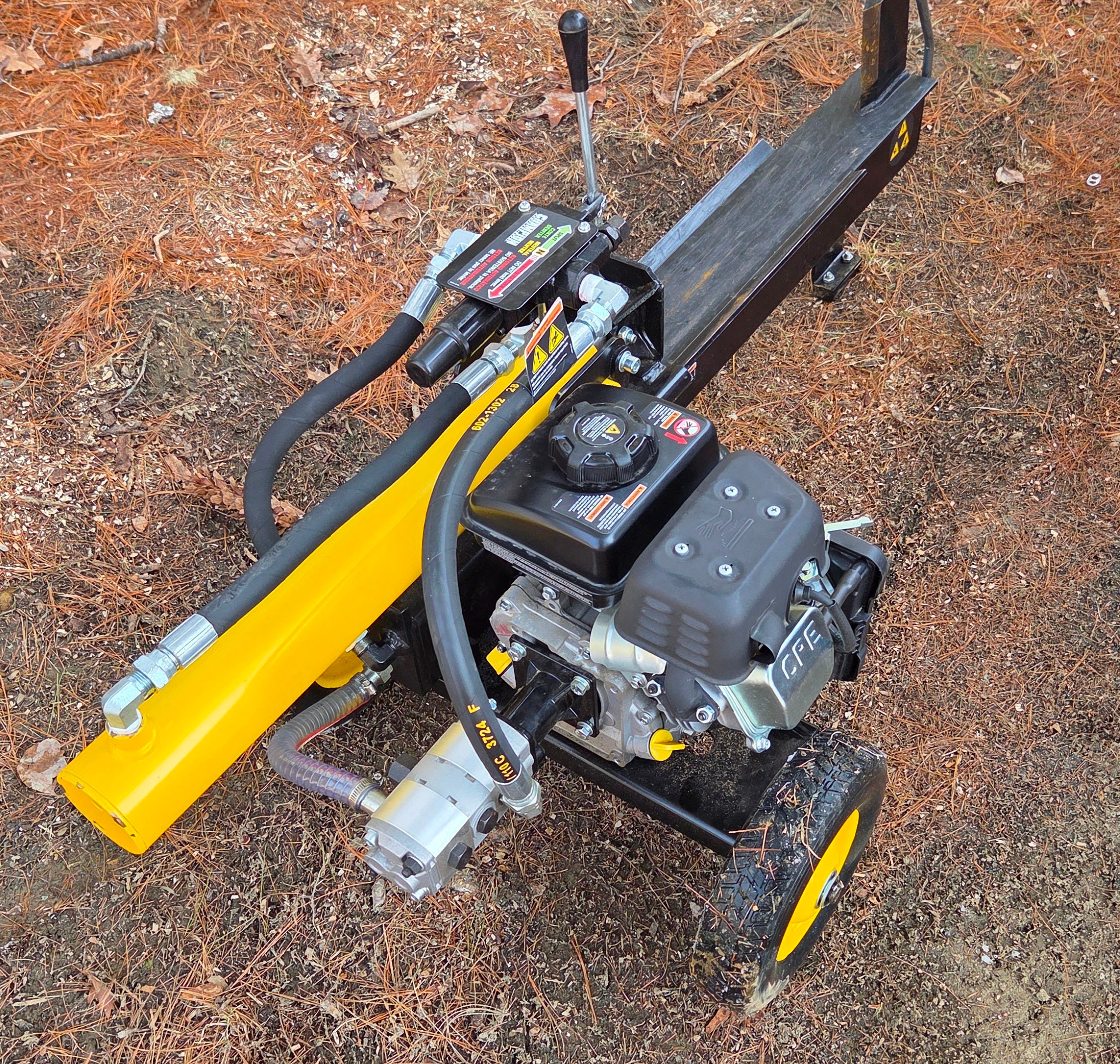
Picked up a small used log splitter. Great tool for the homestead.

JOIN OUR TELEGRAM GROUP: The way we share information has changed—fast. I grew up with magazines and books, then early bulletin boards, then blogs like this one. Now most people get their updates through videos, audio, and quick posts. I’ll be honest, I was slow to adapt.
One platform that’s taken off is Telegram. It’s simple and clean. Videos, audio, photos, and written posts all live in one place. No jumping around. No clutter.
That’s why I started The Prepared.
At its core, it’s a direct line between us. Real-time updates. Real conversations. What’s happening in the world, what’s happening here in Maine, what we’re cooking for dinner, what we’re thinking about, and what we’re keeping an eye on. I post as things happen. Easy in, easy out.
If you’re uneasy about where things seem to be going…
If you want to be more ready for uncertain times…
If you’re looking for a community of people who actually understand what’s going on…
You’re welcome here.
It’s free.
It’s not a scam.
And it’s definitely not a circus.
Join us inside The Prepared → https://t.me/theprepared
That’s it for Issue 9.
Thanks for taking the time to read Issue 9 of SURVIVE. Every like, share, and comment on Modern Exodus truly matters. That’s how this grows—one person at a time.
There’s also a paid subscriber option for those who want to support the work. No pressure. If you’re able and decide to, it’s appreciated.
I’ll leave you with this. You see what’s happening. Things are changing. The world feels more uncertain, more unpredictable, and at times, more dangerous. That’s not fear—it’s paying attention. Adjust how you live. Get prepared while you still have the time and the ability to do it your way.
If there’s something you want covered in future issues of SURVIVE or on Modern Exodus, speak up. Your input helps guide what comes next.
Be ready.
Jake Martin | Modern Exodus
This is a really good publication. It’s well done and very informative.
This was really well done.
I concur about simpler times. We're from the same generation and I wish my kids could experience our youth.
On the SoloFish pistol light, I have the same one I use on a Glock 44. Solid budget WML.